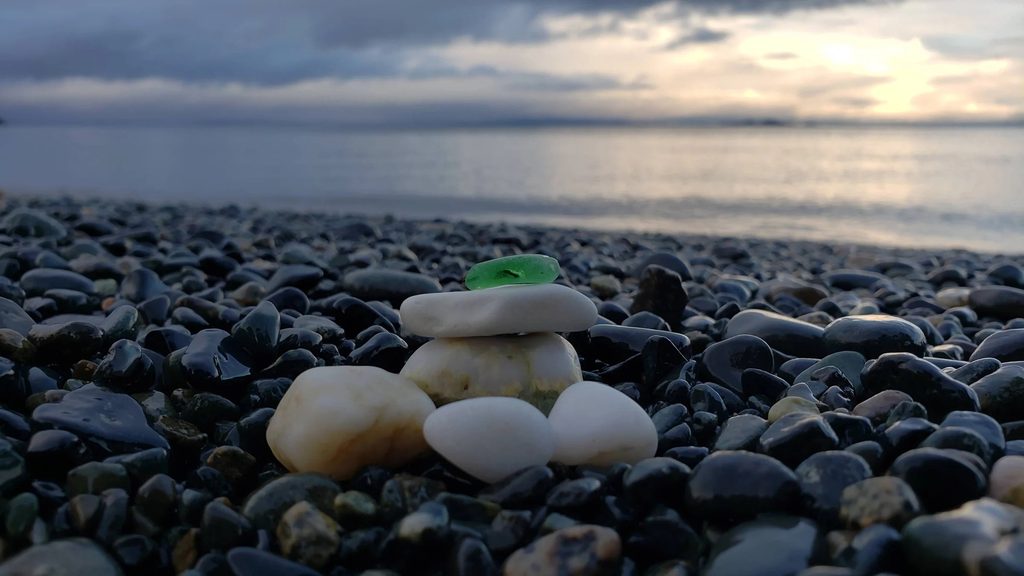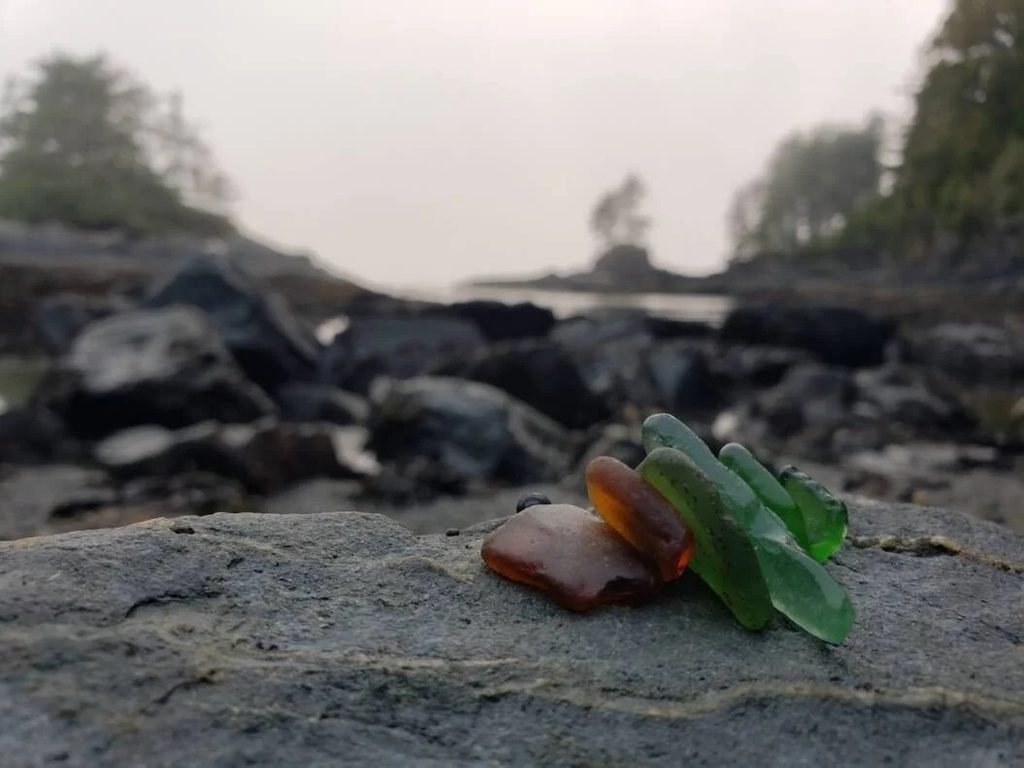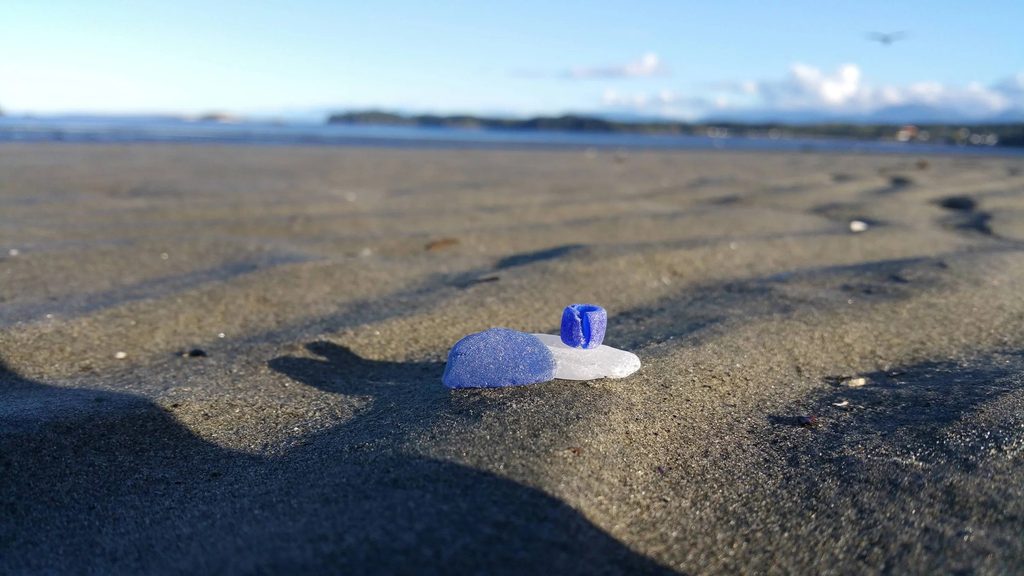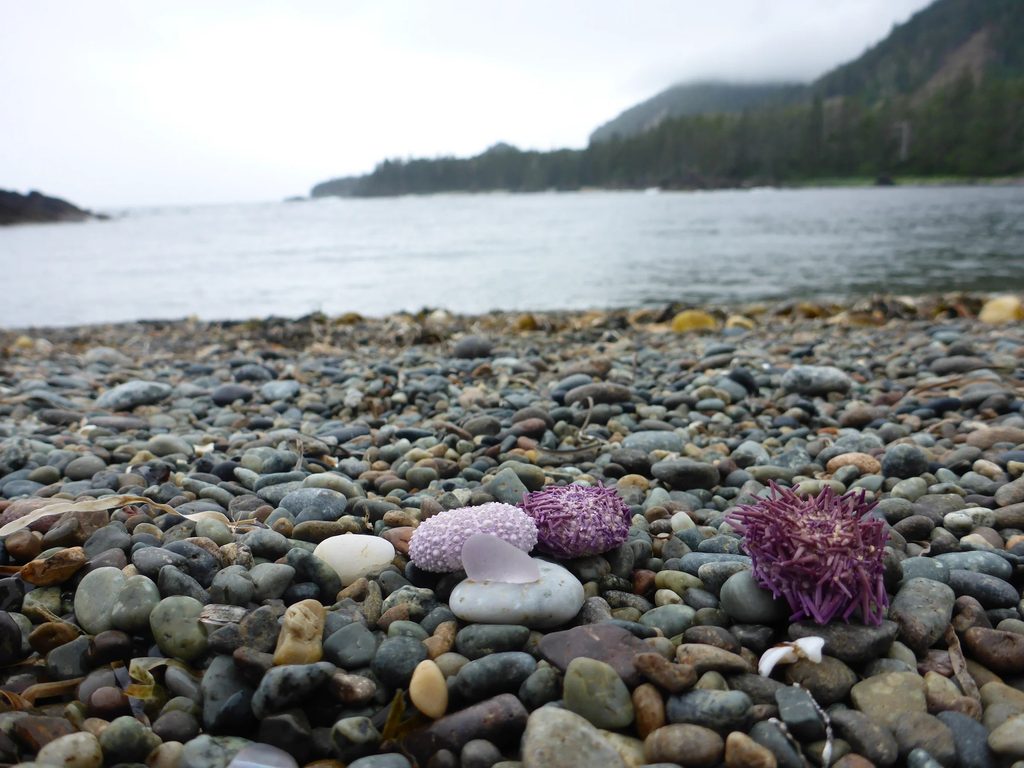

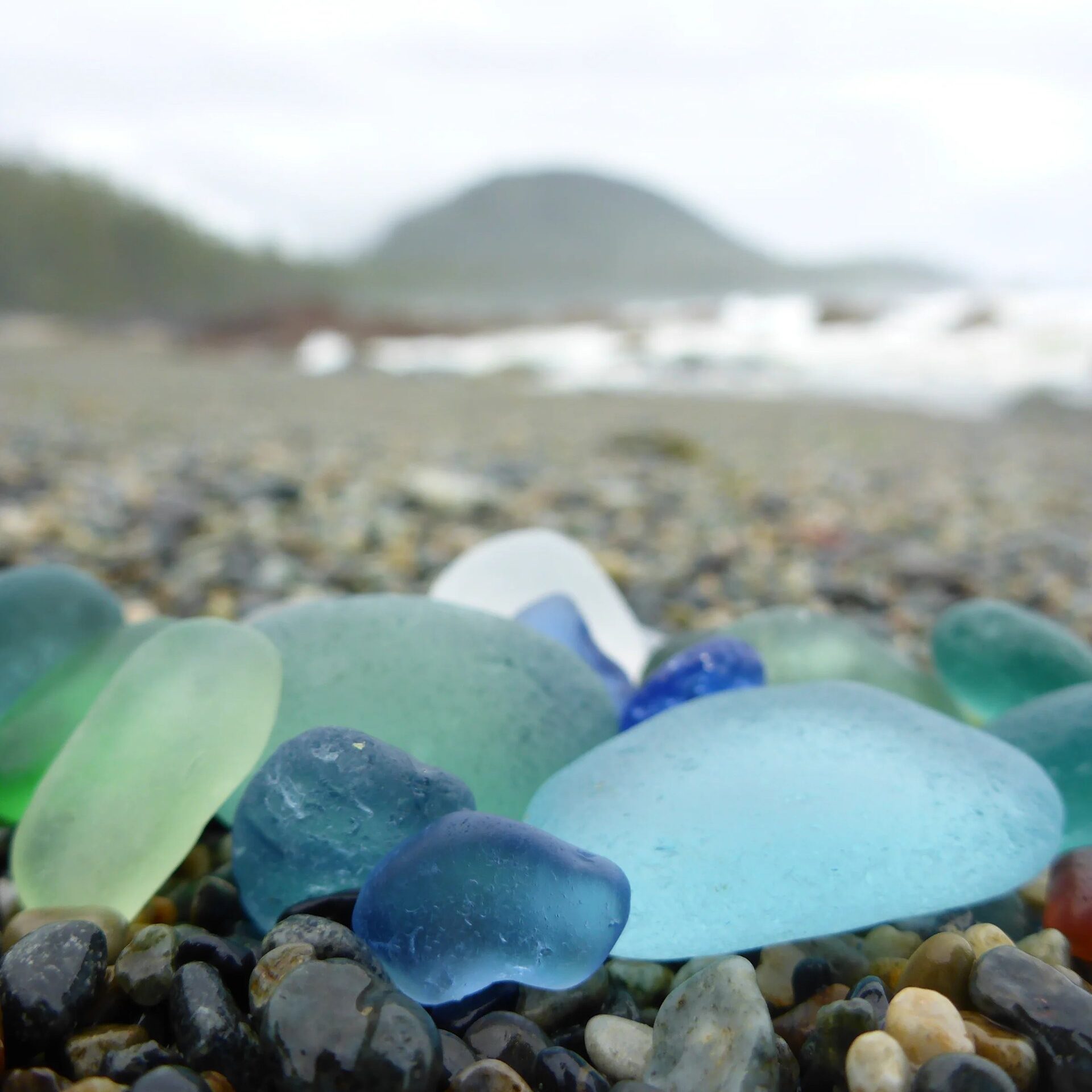
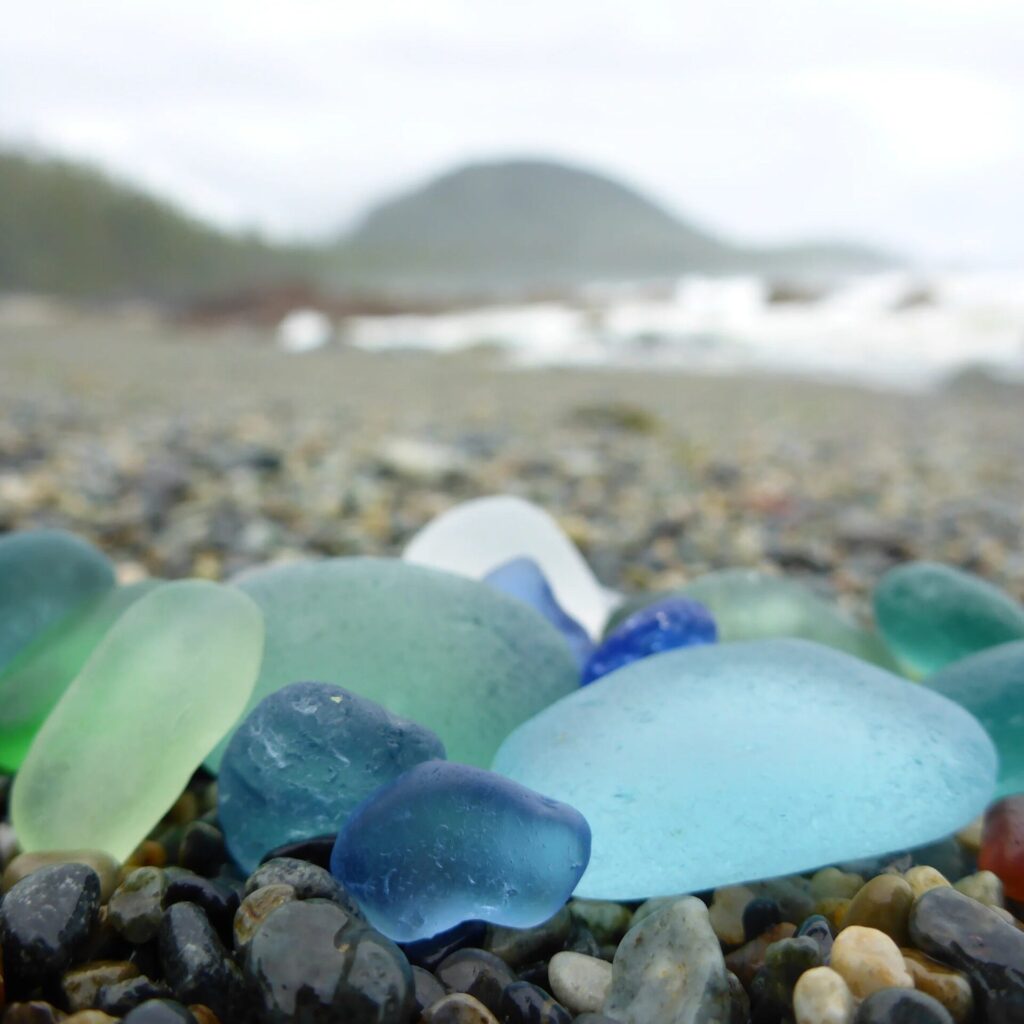
When I find a piece of sea glass on a remote Northern Vancouver Island beach, I don’t wait to photograph it. I don’t take it home to a studio with perfect lighting and pristine backdrops. Instead, I capture it right there, in the place where the ocean left it, under whatever light the day offers.
This is the heart of Pebble and Pask.
The Joy is in the Finding
There’s something magical about photographing sea glass exactly where you discover it. The joy of finding that perfectly frosted shard is fleeting—a glimmer of excitement in the moment that deserves to be captured immediately. When I photograph glass on its beach of origin, I’m not just documenting an object. I’m preserving a moment, a feeling, a small adventure that unfolded on the edge of the wild Pacific. It’s the result of always wanting to know what’s around that corner….
The beaches in our corner of the world make excellent backdrops. From the weathered driftwood logs to the perfectly sized gravel shaped by endless tides, these coastal landscapes tell their own stories. A sea glass photograph taken on-location carries authenticity that no studio setup could replicate.
Embracing the Unpredictability
Living in a coastal temperate rainforest means accepting that nature sets the schedule. Port Hardy is marketed as “Where the highway ends and the adventure begins,” and that’s precisely what each beachcombing trip feels like. Many of our favourite beaches require drives of over an hour on gravel roads. With more than 200 wet days a year and countless cloudy or misty ones, sunshine becomes something to appreciate rather than expect.
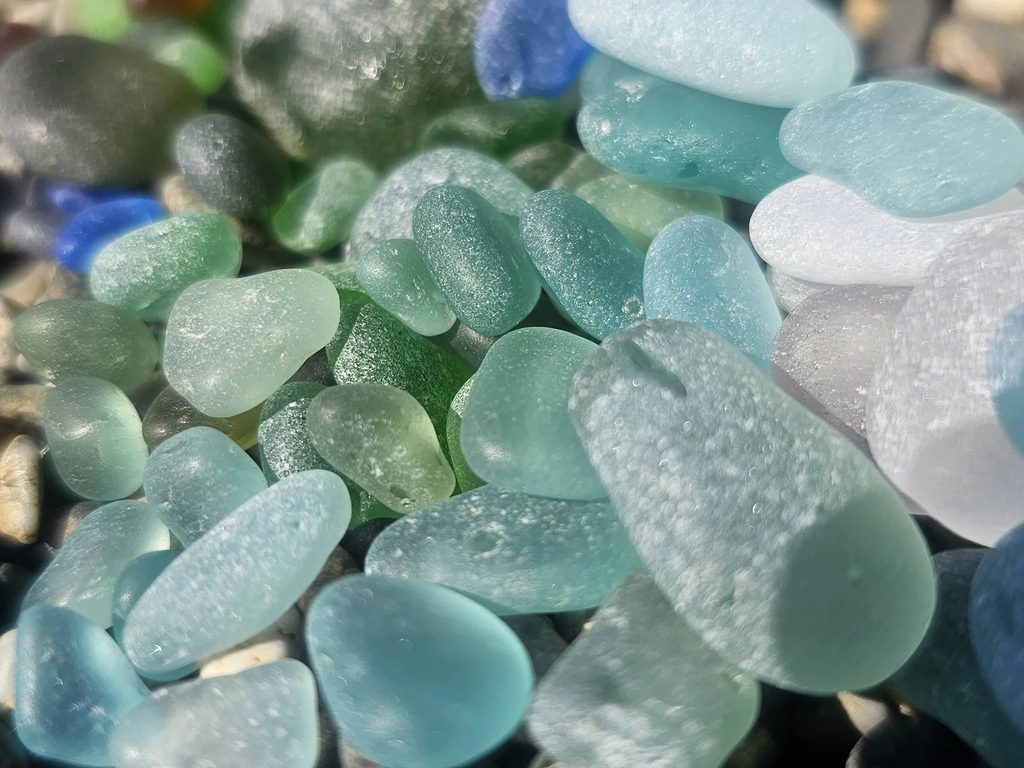
But here’s the secret: sea glass doesn’t need perfect sunshine to shine. It pops most beautifully when it’s wet—freshly kissed by retreating tide water or a gentle rain. Those overcast days that might disappoint a landscape photographer? They’re often ideal for sea glass. And when the light does break through the clouds after a grey morning, there’s a quality to it that no studio can manufacture.
My favourite time to shoot is whenever that light decides to appear, or when my companions have stopped for a break. Most photos happen mid-day to early afternoon, because practicality matters. Hiking in darkness, calculating drive times home, and considering the company of family and friends all factor into the equation. A sunset photo shoot might be aesthetically perfect, but it’s rarely possible when you’re hours from home on a remote beach.
Finding Beauty in Imperfection
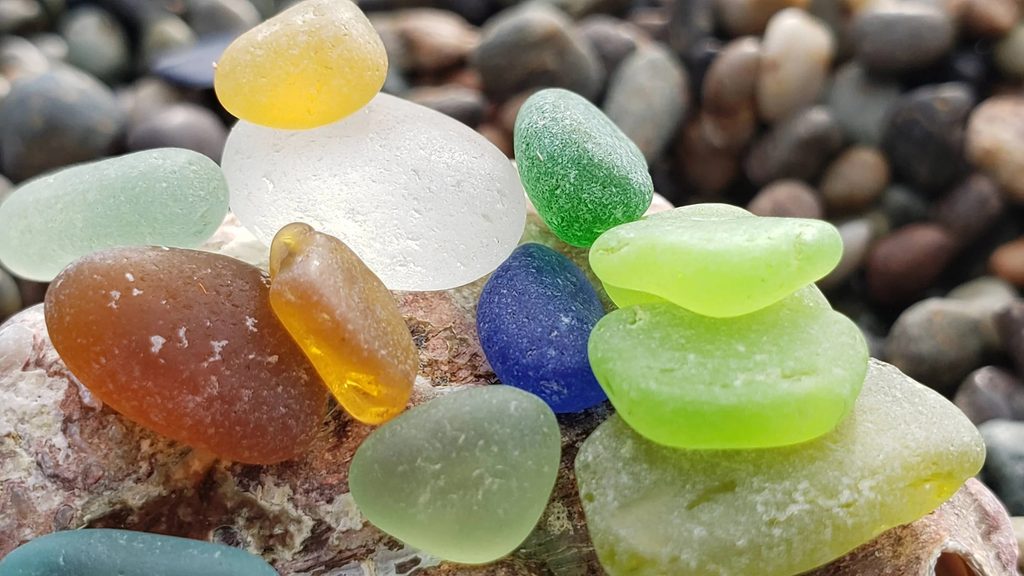
I alternate between close-up shots of the glass and wider frames that hint at the location of each find. The backgrounds repeat—favourite beaches where tides and currents conspire to bring floating debris and shape glass just right. These repetitions aren’t limitations; they’re signatures of place.
Connecting the glass to its beach keeps the focus off perfection. The flaws, the chips, the way sand clings to frosted edges—these imperfections are what make sea glass unique. If perfection were the goal, I could tumble any glass at home and photograph it on seamless paper. But that’s not the story I want to tell.
Keeping photos of sea glass discoveries in the wild gives us souvenirs we can easily carry home. When the routine of life grows monotonous, these images become reminders of time spent in wild places, of the ocean’s patient artistry transforming what could be considered trash into treasure.
The Art of Simple Tools
My equipment is pocket-friendly and portable. It’s also pretty simple as I still haven’t mastered learning all those settings and we’re a lot too rough and tumble for bulky gear. These interesting hikes to remote beaches don’t allow for elaborate gear. Sometimes only bears would consider it a trail. Given that I rarely hunt for glass alone, my schedule is often not my own, frequently rushing to beat tides, save daylight or entertain those who have other interests. When I find a piece worth photographing, I shoot it on the day I discover it, though I often save up several pieces to create groupings when the light improves or when I can find spots with less visual clutter—fewer buildings, cars, or bystanders to distract from the glass itself.
The editing is minimal: straightening horizons, cropping to improve composition. The natural light does most of the work, and I let it. Finding an amazing piece of glass on a rainy day, hurrah, a reward for the hardship.
A Changing Landscape
Sea glass is becoming harder to find. When I started documenting my finds eleven years ago, there were fewer hunters, less competition. But beyond that, the world has changed. Most regions have moved from glass to plastic, and there’s growing social awareness about responsible disposal. These shifts are good for the environment, even as they make sea glass increasingly rare.
This scarcity makes each find more precious, each photograph more meaningful.
The Secret Alchemy of the Journey
Part of the magic isn’t really about the glass at all. It’s about the time away from daily routine, about standing close to the ocean’s therapeutic restorativeness. It’s about the companionship of family and friends—several uninterrupted hours to enjoy their company without the usual connectivity, chores, and chaos. Picnicking close to nature, the focus on things outside of day-to-day life. That’s the special combination of magic and the wild outdoors.
If you’re visiting Vancouver Island and hoping to try beachcombing yourself, remember this: the journey is what makes the destination worth reaching. The drive on gravel roads, the hike across logs and stones, the patience required to scan endless pebbles, the acceptance of whatever weather arrives—these aren’t obstacles to overcome. They’re part of the experience that transforms a simple walk into an adventure.
And when you find that piece of sea glass, take its picture right there. Let the beach, the light, and the moment tell the story together.
Chris | Pebble and Pask